
Customer story · WordPress · Content strategy
318 articles turned into 913% more TOP10 keywords
A content-only programme for Spioch.eu grew clicks by 163%, impressions by 449% and the number of pages earning traffic by 221%—without a technical rebuild or a full-site SEO engagement.

The client
Spioch.eu is the company website of a mattress showroom with an extensive editorial section.
Its search opportunity extends beyond products into sleep, ergonomics, mattress selection and broader bedroom topics.
The goal
Build organic visibility and traffic through new content alone—without treating the engagement as a full technical SEO programme.
The model needed to cover informational, comparative and purchase-led searches while developing authority around the entire sleep category.
Baseline27 Feb 2024 – 27 Feb 2025
→
Results28 Feb 2025 – 28 Feb 2026
Source: Google Search Console. Poland, all devices. Two consecutive 12-month periods.
The starting point
Basic visibility, but not yet a connected library for long-tail demand
The existing blog did not yet cover enough guides, rankings, comparisons and adjacent bedroom questions to build consistent visibility across the category.
- Individual posts needed to become connected topic clusters rather than isolated publications.
- Internal links had to help both people and search engines understand the relationship between topics.
- The content plan needed to mix early research with comparison and purchase intent.
- No technical rebuild, full-site SEO programme or dedicated CTR optimisation was included.
WordPressCompany website and blog
Content onlyProject scope
2–4hWeekly workload
12 monthsDelivery period
PLSearch market
The content-only system
Build clusters, publish consistently and connect the library internally
The programme used a small weekly time budget to create a large, structured content footprint.
- publish 318 new articles over 12 months,
- mix guides, rankings, comparisons and adjacent bedroom subjects,
- organise topics as pillar-and-cluster relationships,
- connect related articles with internal links,
- repeat the process for 2–4 hours each week.
An important attribution note
This work was completed manually, with AI support, before SEOAssistant existed. The project helped shape the product concept; the result should not be attributed to the current application.
- No technical rebuild
- No full-site SEO engagement
- No dedicated title or meta optimisation
- No SEOAssistant automation at the time
Content that pulled visibility
Different formats captured informational, comparative and purchase-led intent
The strongest opportunities were not random blog ideas. Each topic contributed to a wider sleep and mattress cluster.
1. Tests and rankings
Example: The best knee pillow for side sleepers—a model test ↗
A comparison-led format bridges an informational need with product consideration and works naturally inside a broader sleep-comfort cluster.
2. Product comparisons
Topics such as pocket-spring versus foam mattresses help visitors understand trade-offs while creating a path towards commercially relevant pages.
3. Use-case guides
Guides about toppers, thin mattresses and specific mattress sizes answer practical questions and extend the long-tail footprint around established product categories.
The result after 12 months
The content library expanded reach and activated far more pages in search
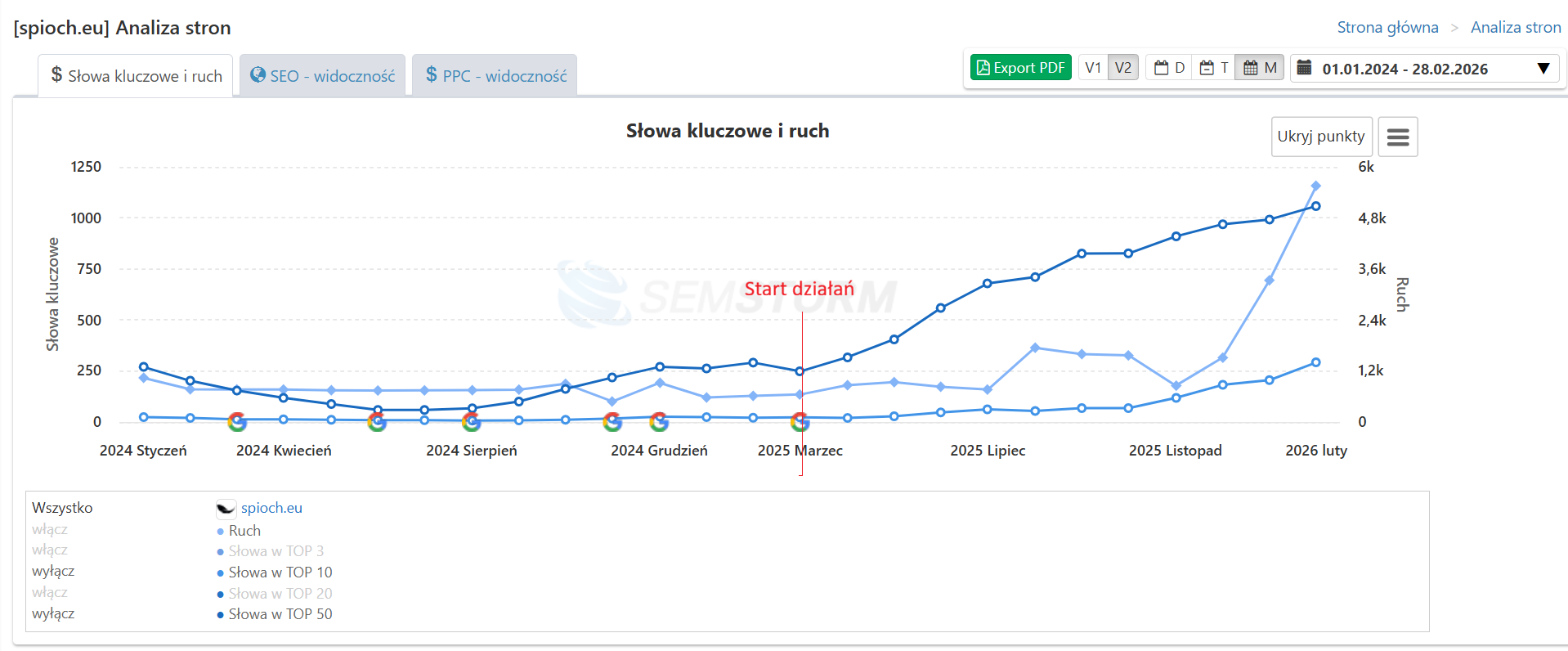
Visibility grew across every reported reach metric, with TOP10 and TOP50 keyword counts increasing by more than ninefold.
+163.49%Clicks
+449.16%Impressions
0.53%CTR after scalingFrom 1.10%
+913.41%Keywords in TOP10
+988.32%Keywords in TOP50
+221.43%Pages earning clicks
Scale without a content team—and a clear second-stage opportunity
318 new articles
2–4 hours per week
CTR 1.10% → 0.53%
Publishing at scale introduced the domain to a much larger set of queries, many initially ranking between positions 11 and 50. Impressions therefore grew faster than clicks and CTR fell. The higher TOP10 and TOP50 counts, together with more pages earning traffic, show that reach was built; the next phase is converting more of that reach into clicks.
What comes next
Turn the expanded search footprint into more clicks and customer journeys
The library is now large enough for focused optimisation to build on the reach already created.
1. Recover CTR on the highest-impression pages
Improve titles and meta descriptions for the 20–50 pages with the greatest existing visibility.
2. Move TOP11–20 opportunities into TOP10
Prioritise terms already close to the first page because they offer the clearest near-term click opportunity.
3. Connect purchase-led articles to the offer
Strengthen internal paths from comparison and buying content to relevant service or product pages.
SEOAssistant was subsequently designed to make this kind of structured work faster and more predictable while extending the workflow beyond content alone.
Build your own repeatable growth system
Find the content clusters and existing pages with the strongest SEO potential
Run a self-service analysis or book a tailored conversation about turning systematic SEO work into wider visibility and real traffic.