

“SEO on autopilot” should not mean pressing one button and hoping that AI-generated text produces rankings. A useful SEO autopilot is a controlled operating system: it finds opportunities, chooses the right pages, prepares changes, shows exactly what will be modified and moves approved work towards publication.
That is the direction behind SEOAssistant. The platform is designed to automate as much repetitive SEO execution as possible while keeping the level of human control appropriate for each customer.
SEO autopilot is a workflow, not a content generator
Most SEO tools stop after analysis. They identify missing keywords, thin pages or ranking gaps and leave someone with another spreadsheet of tasks. Generic AI writing tools start at the opposite end: they generate copy, but often without knowing which page should be changed, why the change matters or what should happen next.
A real SEO automation loop connects the whole process:
- build a relevant keyword market;
- decide which opportunities fit the business;
- connect each opportunity with the right product, category or article;
- prepare the proposed optimization;
- show the difference between the current and proposed version;
- publish approved changes and keep their history;
- measure the result and start the next cycle.
Without this loop, “automation” usually means producing more drafts. With it, automation means consistently completing more of the right SEO work.
Step 1: build the market you actually want to compete in
A real example comes from AP Komfort, a Polish online store specializing in kitchen and bathroom equipment.
SEOAssistant builds a market of candidate search queries and presents each phrase together with signals such as search demand, business fit and its current approval status. The aim is not to accept every popular phrase. It is to teach the workflow which searches genuinely match the store’s products and commercial direction.
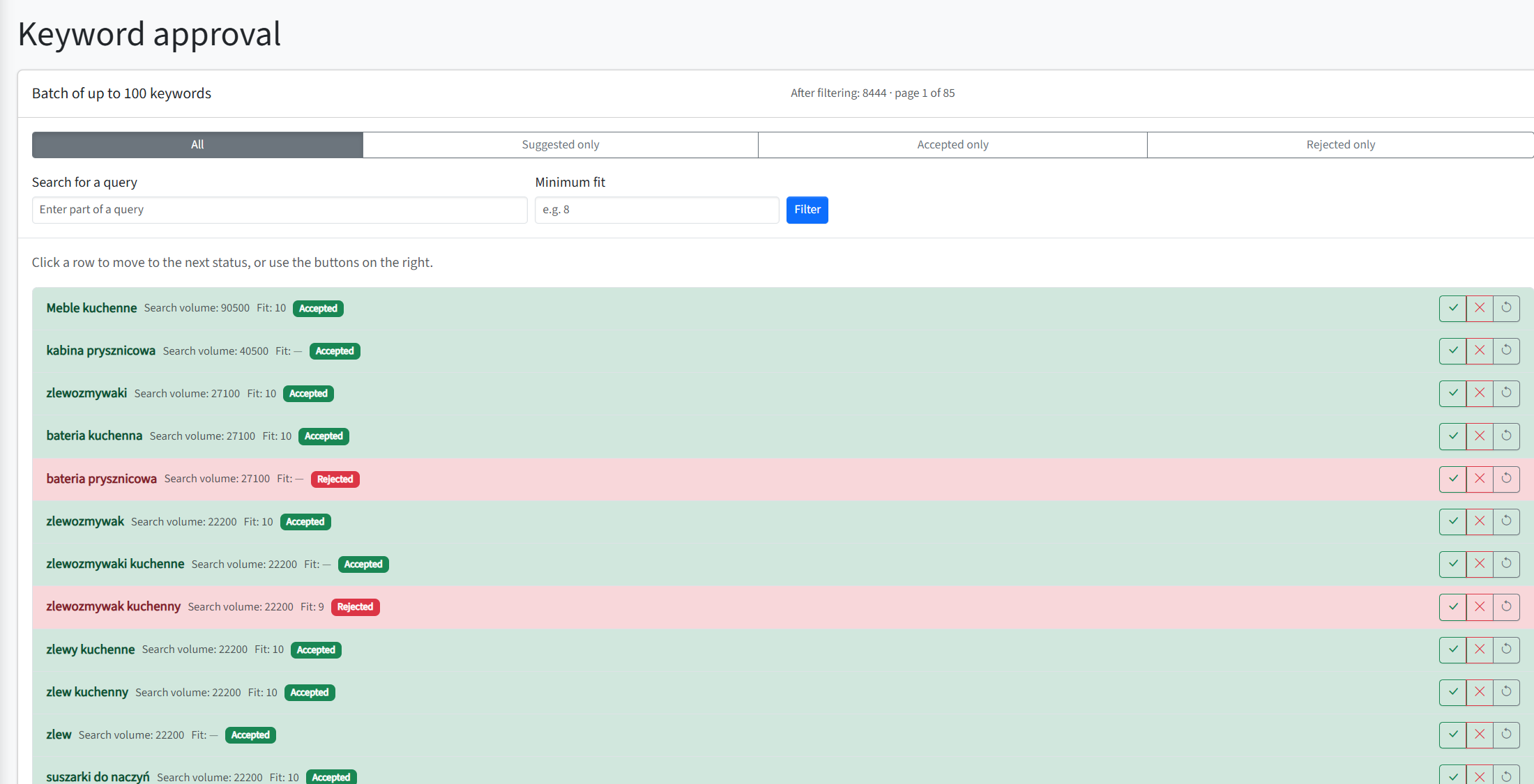
At the time of capture, the AP Komfort workspace contained 5,933 approved keywords and another 1,146 awaiting a decision. That accepted direction becomes the input for the next stages of the system.
Step 2: turn priorities into a repeatable production queue
Once the keyword scope is defined, SEOAssistant can connect demand with existing products, categories, manufacturers and editorial opportunities. It then prepares work according to the website’s data, templates and content rules.
For AP Komfort, this workflow had already produced 2,409 product revisions at the time of capture, including 2,228 published changes. It also included 88 published category revisions and 21 published manufacturer revisions.
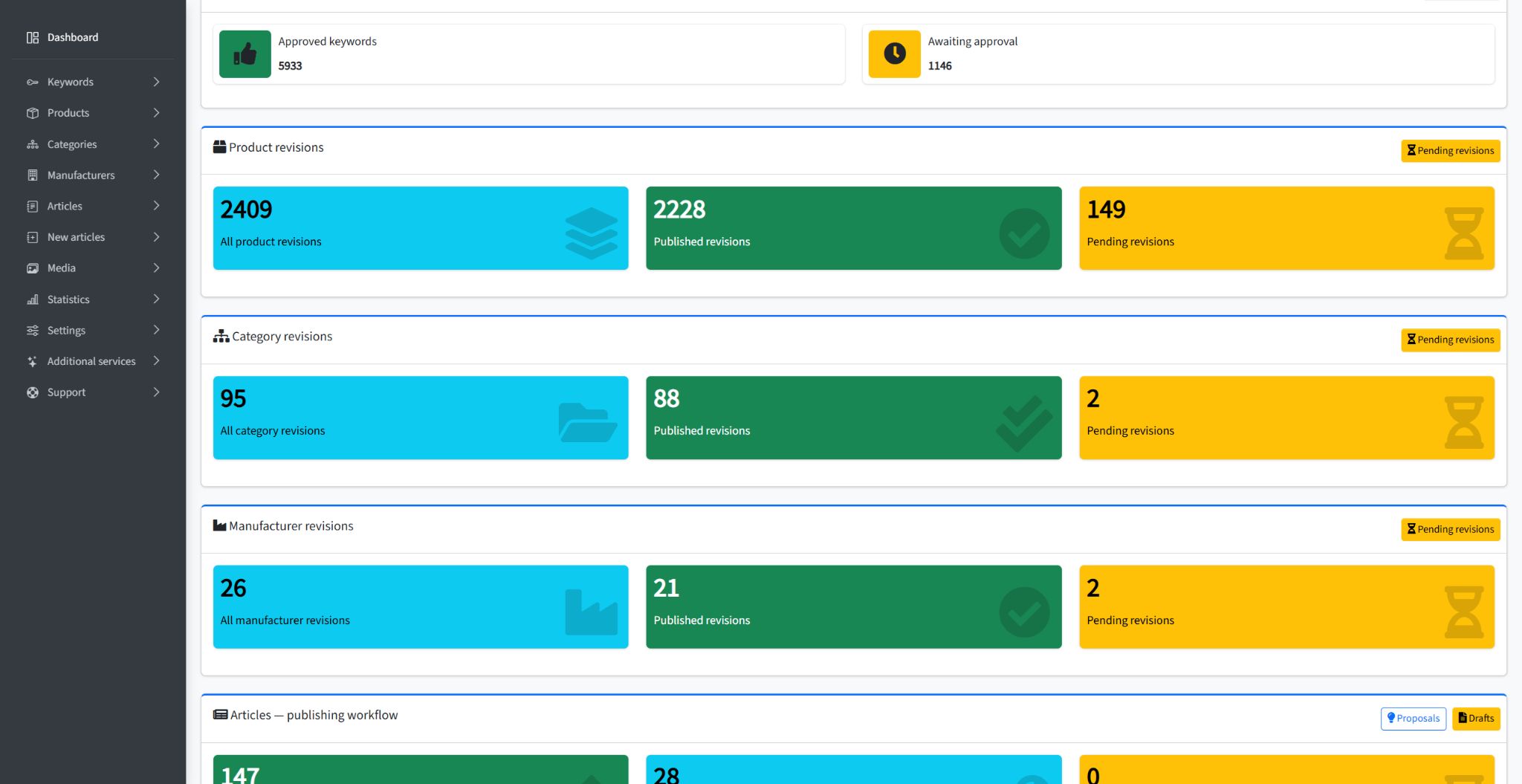
These numbers matter because they show the difference between an isolated AI prompt and an operating process. A prompt can generate one description. A process can coordinate thousands of decisions and revisions while preserving their status and history.
Step 3: prepare changes from real business inputs
SEO content should not begin with an empty text box. A useful proposal can draw on the existing page, product data, selected keywords, category context, templates, internal-linking rules and customer-specific instructions.
Depending on the page and opportunity, the resulting revision can cover metadata, product or category copy, article content and related on-site improvements. The goal is not to replace facts with plausible-sounding language. It is to use the available facts to prepare a stronger version that remains open to verification.
Step 4: make review fast enough to work at scale
Human approval only helps if reviewing a change takes less effort than recreating it. That is why SEOAssistant keeps the current and proposed versions side by side and provides a visual diff.
The example below is a real AP Komfort product revision awaiting approval. Removed fragments are marked in red and proposed additions in green, so a reviewer can immediately see what will change. The revision relates to a Rea Blade countertop basin tap available from AP Komfort.
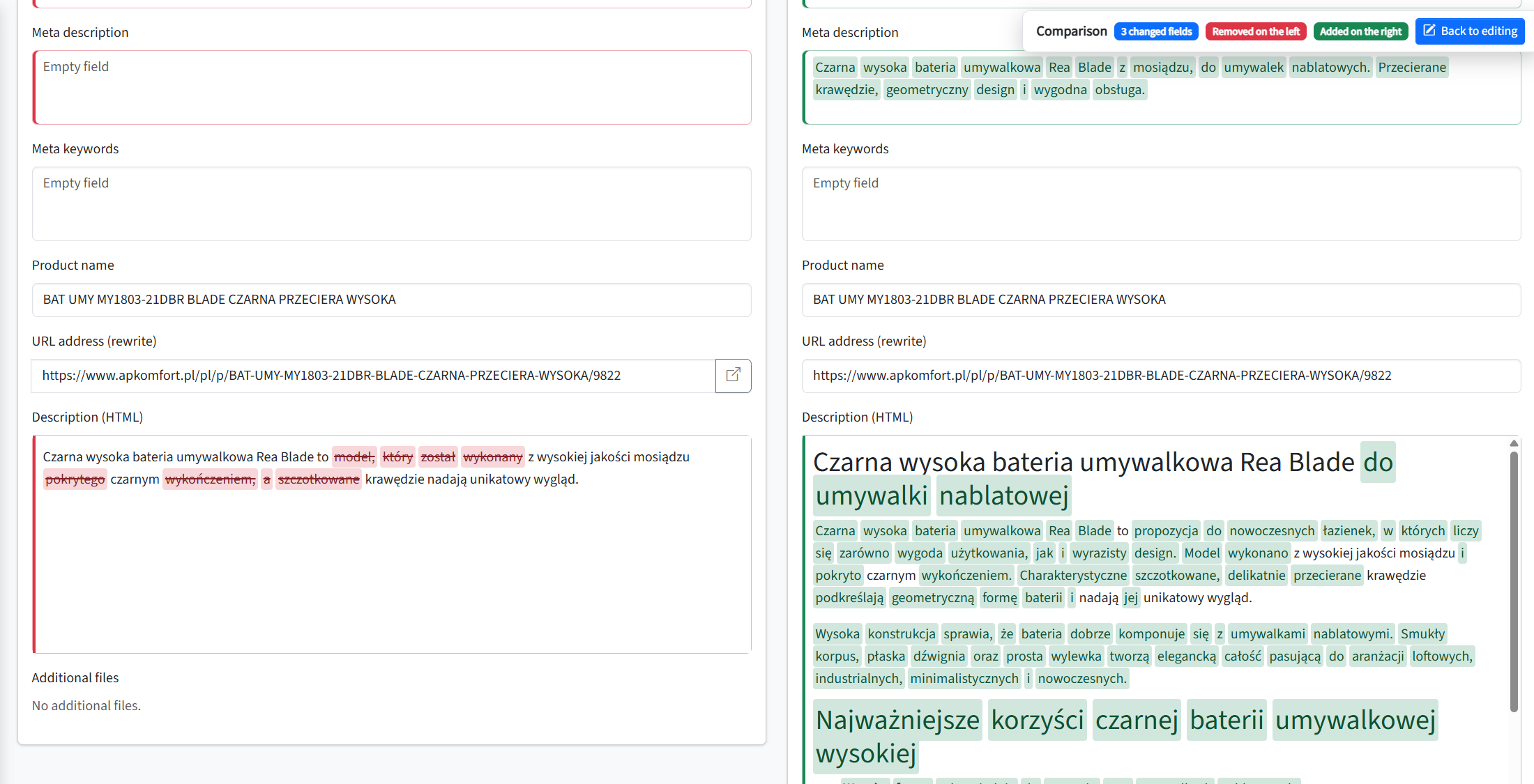
The reviewer can accept the proposal, edit it, reject it or return it for another revision. This keeps factual responsibility visible without forcing the team to compare long documents manually.
Human review can be a setting, not a permanent bottleneck
Different organizations need different levels of control. A new customer may want every change reviewed. Another may only require approval for high-risk pages, while allowing proven types of metadata or content updates to move forward automatically.
SEOAssistant is moving towards this controlled-autonomy model: the workflow remains traceable, but the final review stage can become optional where the customer requests it and the process has been appropriately configured. The objective is not blind publishing. It is to automate each repeatable decision once the business is comfortable with the rules and quality level.
What happened after the workflow was introduced?
AP Komfort started working with SEOAssistant in December 2025. Since then, the store’s search visibility has followed a clear upward trend.
Comparing the December 2025 weekly average with the latest complete week shown on the chart:
- the number of keywords ranking in Google’s Top 10 increased from approximately 753 to 2,090 — an increase of around 178%;
- the number of keywords ranking in the Top 3 increased from approximately 303 to 948 — an increase of around 213%.
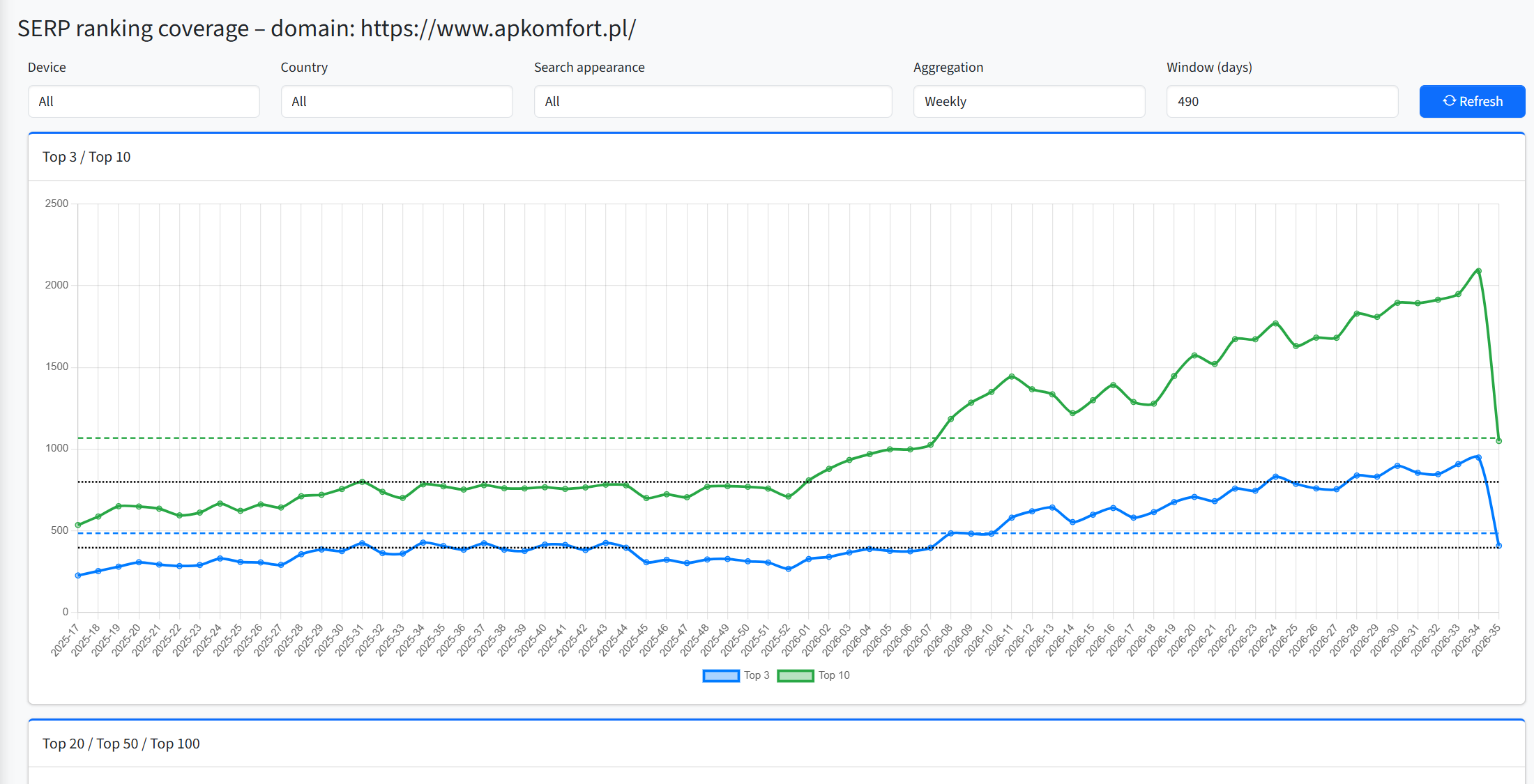
This does not mean that one description or one metadata change produced the result. SEO growth is influenced by many factors. What the chart does show is that a sustained, increasingly automated operating process coincided with substantial growth across both Top 10 and Top 3 coverage. The final point represents the current incomplete week and is not included in the calculation.
For more context about the store and the earlier stages of the project, see the full AP Komfort SEO case study.
So what does “SEO on autopilot” actually mean?
It does not mean removing strategy, business knowledge or accountability from SEO. It means reducing the manual work required to turn those inputs into consistent execution.
The system should automate
- collecting and organizing search opportunities;
- matching keywords with relevant pages;
- prioritizing repeatable SEO work;
- preparing grounded revisions;
- showing differences and tracking decisions;
- coordinating approved publication;
- measuring progress and restarting the cycle.
People should remain responsible for
- business priorities and boundaries;
- facts the source data cannot verify;
- brand and legal requirements;
- deciding which workflows still require approval;
- changing the rules when the business changes.
The result is not SEO without people. It is an SEO operation in which people spend less time copying data, coordinating drafts and checking what changed — and more time setting direction.
Start with supervised automation, then earn autonomy
The safest route to SEO autopilot is gradual. Connect the data, define the rules, review early outputs and use the visible history to decide which parts of the process can run with less intervention.
That is how automation becomes operational rather than experimental: every completed cycle improves the available context, expands the set of trusted actions and makes the next review faster.
If you want to see which parts of your SEO workflow could be automated first, book a tailored SEOAssistant demo.